Rat Control Idaho Falls, ID | Licensed Rat Exterminator
Rat problem in Idaho Falls? Licensed trapping & exclusion for Norway rats and roof rats. Rat Control Idaho Falls: No poison-only quick fixes. Call (208) 361-9860.
Experienced Team
Rat Control in Idaho Falls, ID
Rats are a different problem than mice: larger, more cautious, and increasingly common across Idaho. Sightings have climbed sharply statewide over the past several years, and while Idaho Falls hasn’t seen the scale of the reported rat surge in the Boise/Treasure Valley area, the same underlying drivers apply here: milder winters that fail to knock back outdoor populations, and a legal gap where Idaho’s state code gives county animal control no jurisdiction over rat infestations specifically. That responsibility sits with property owners.
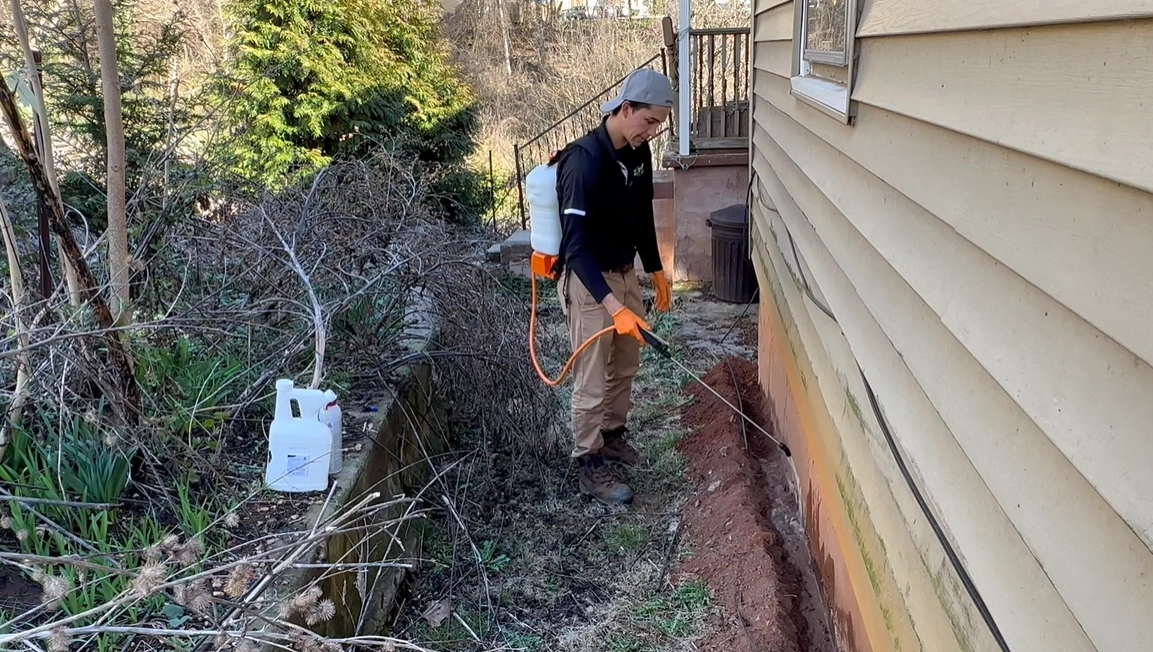
We provide licensed rat control trapping, burrow inspection, and structural exclusion for homes and businesses across Idaho Falls, Ammon, Ucon, Iona, Shelley, and Rigby.
Call (208) 361-9860 for a same-week inspection.
Our Rat Control Process
Inspection. We assess both interior activity and exterior burrow sites, identifying whether you’re dealing with Norway rats, roof rats, or both.
Structural Exclusion. Rats need an opening only the size of a quarter to enter larger than what stops a mouse, but often present around larger utility penetrations, garage door thresholds, and foundation gaps in Idaho Falls’ older housing stock (median build year 1977). We seal these with materials rats can’t chew through.
Licensed Trapping. We use trap placement and bait strategies suited to how cautious the specific population appears to be; a rat population that’s been disturbed before requires a different approach than a fresh infestation.
Follow-Up. We confirm removal is complete and exclusion is holding, since a rat population that isn’t fully addressed will simply regroup.
Norway Rats vs. Roof Rats
Idaho Falls sees two species of concern. Norway rats are the larger, heavier-bodied rats most people picture. They burrow near foundations, sewer lines, and woodpiles, and prefer ground-level access. Roof rats are smaller, more agile, and prefer climbing; they’re more likely to enter through rooflines, attic vents, or trees and shrubs touching a structure. Correctly identifying which one you’re dealing with changes where we focus inspection and trapping, since a ground-burrowing species and a climbing species use entirely different entry routes.
Why Rat Control Requires a Different Approach Than Mouse Control
Rats are more intelligent and more cautious than mice, and they learn quickly. A trap that’s been triggered once without success, or bait that’s been handled by an inexperienced attempt, can make a rat population noticeably harder to catch afterward; they’ll simply avoid the area. This is one of the biggest reasons DIY rat removal underperforms: an amateur attempt that fails doesn’t just waste time; it can actively make the professional job harder later.
There’s also a legal dimension homeowners often don’t realize: Idaho requires a license to trap rodents professionally. This isn’t a formality; licensed trapping involves specific placement, bait, and handling knowledge that meaningfully affects success rates, particularly with a species as trap-averse as rats.
Open everyday from
24/7
Call to ask any question
Signs of a Rat Infestation
- Larger droppings than mice, typically capsule-shaped and about half an inch long
- Gnaw marks on wood, wiring, and structural materials, often more extensive than mouse damage due to a rat’s size and stronger jaw
- Burrow holes near foundations, woodpiles, or garden beds, roughly the size of a fist
- Grease marks along frequently traveled routes, darker and more pronounced than mouse trails due to rat body size
- Scratching or scurrying sounds, often heavier and more audible than mouse activity
What Rat Control Costs in Idaho Falls
Based on current regional Idaho pricing, licensed rat trapping typically runs $200–$500, reflecting the additional caution and labor rat populations require compared to mice. Structural exclusion is priced separately at $200–$800+ depending on the number and size of entry points.